Home Products PG2 - Spring Hangers
USA English imperialUK English metricDeutsch (DE-CH-AT)French (Fr)简体中文

Spring Hangers and Spring Supports

Attention: open in a new window. Print

Spring hangers after installation

Spring elements

To compensate for slight vertical displacements in the piping, spring components are used as supports. The functioning of thesecomponents is based on preset helical coil springs which exert a variable supporting load over the whole range of movement corresponding to the given spring characteristics.

Load variations resulting from this are limited through corresponding specifications based on stress calculations for the piping - this depends on the sensitivity of the system.

The fundamental principles relevant for the function of the spring components are found in the MSS SP 58 and VGB R 510 L guidelines.

LISEGA spring hangers

Various versions of spring elements, ideally suited to whatever structural requirements exist, are available. The optimum choice depends on the installation situation.

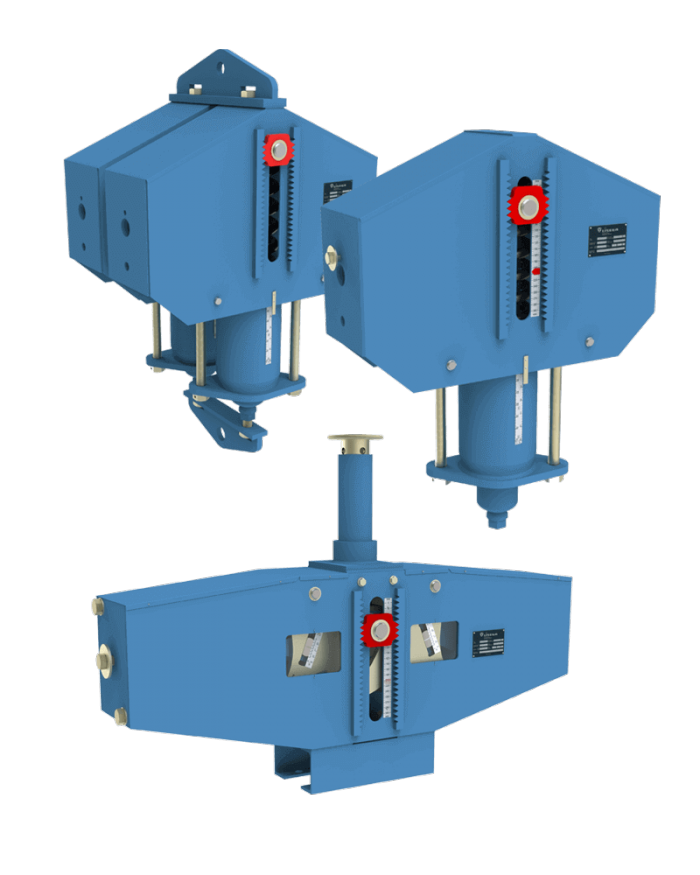
Spring hangers, type 21

Spring hangers, type 21

This type, the one most frequently used, is fitted with an upper connection for suspension. It is installed wherever the surrounding location offers a suitable connection point and sufficient space. The upper connections can be universally adapted with standard components to any given situation.

Spring hangers, type 22

Spring hangers, type 22

Like type 21, but for higher loads

Spring hangers, type 25

Spring hangers, type 25

This type is frequently used for its simple installation, just seating it on the existing steel. The connection is made by a rod passing through the unit.

Spring hangers, type 26

Spring hangers, type 26

Like type 25, but for higher loads

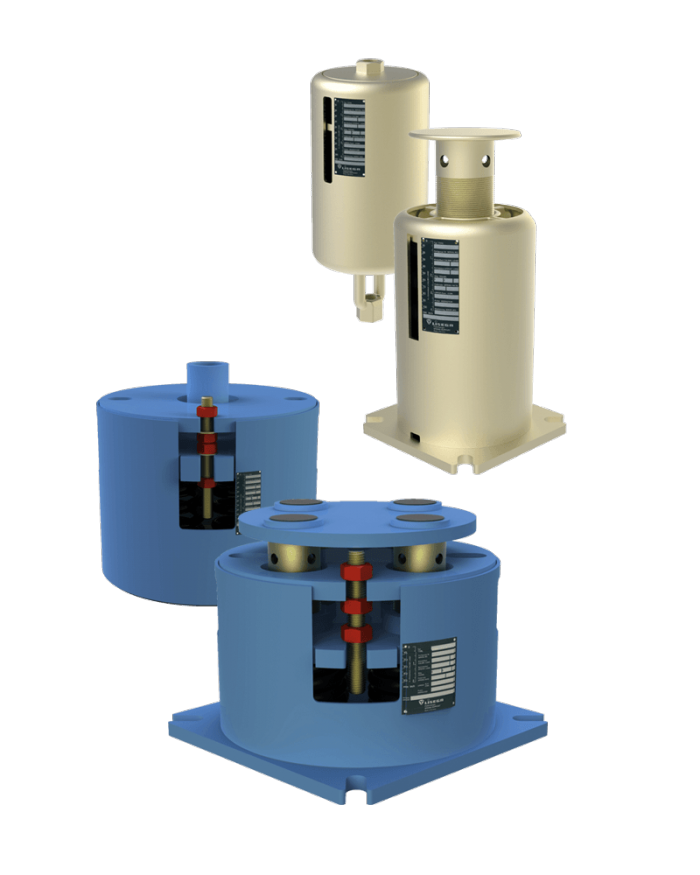
Spring supports, type 29

Spring supports, type 29

If the installation location does not permit suspension, then this model is a suitable alternative as a "prop" support.

Where there is considerable horizontal displacement of the support load, and steel slides on steel, lateral forces can under certain conditions have an adverse effect on the operation of the support system.

To take precautions against this, the use of PTFE bearings is recommended. In this case the counter bearing should have a stainless steel surface.

Spring supports, type 28

Spring supports, type 28

Like type 29, but for higher loads

Angulating spring supports, type 20

Angulating spring supports,
type 20

Unlike the spring support type 29, horizontal displacement can be taken up almost free of lateral forces by this design. This way that constraining frictional forces are completely excluded at all levels of movement, vertical and horizontal.

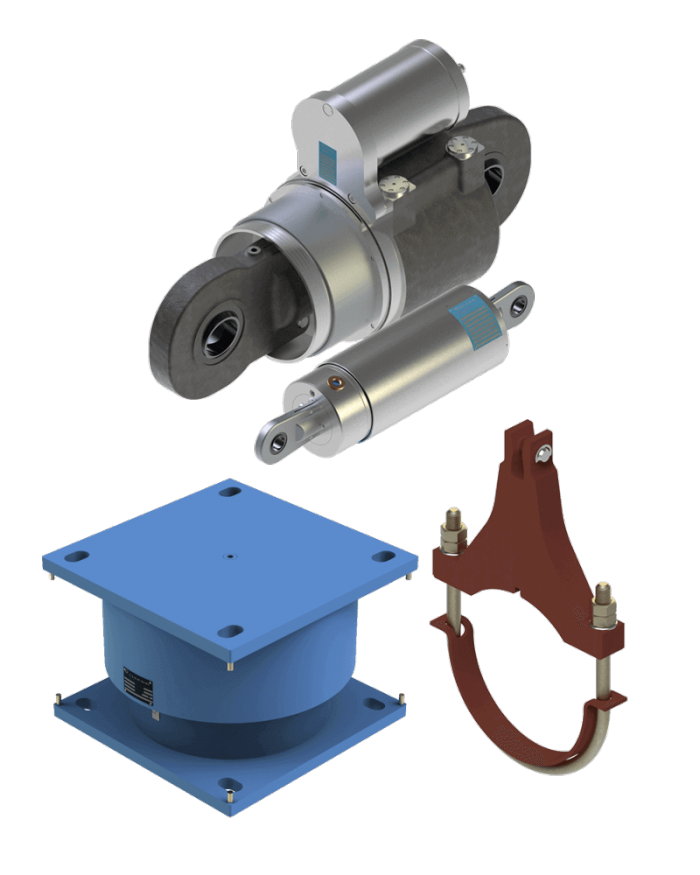
Sway braces, type 27

Sway braces, type 27

These particular components act both in tension and compression and are used to stabilize the piping and other plant components. An additional damping effect is obtained at the same time. The connection parts correspond with those of Product Group 3.

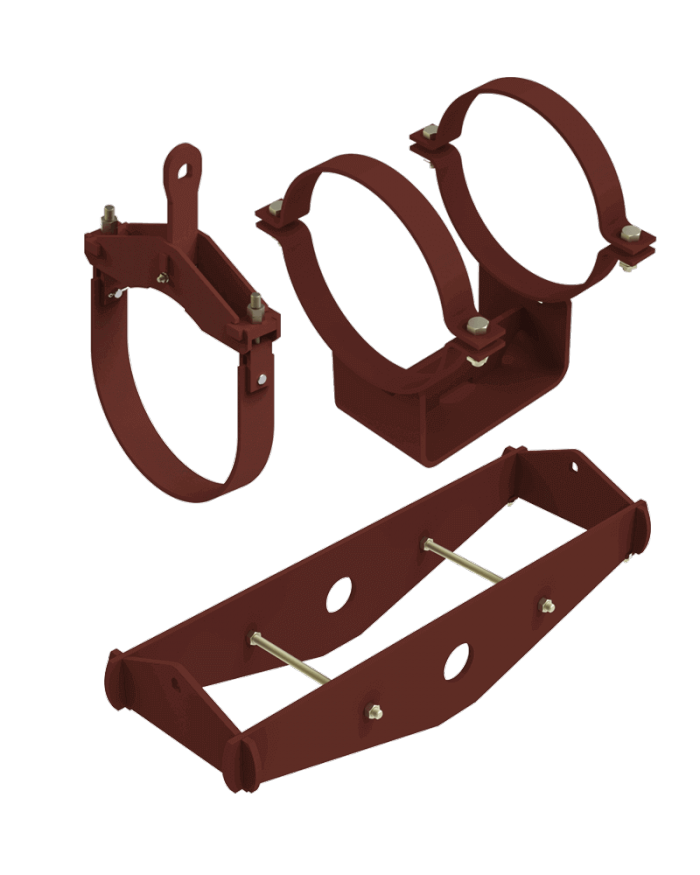
Spring hanger trapezes, type 79

Spring hanger trapezes, type 79


Load setting and blocking

Spring hangers and supports are preset at the works to the installation load and blocked in both directions of movement. Blocking is necessary to take up additional loads during pickling, flushing, or hydrostatic tests. The factory settings are carried out on electronically controlled test benches:

  • with spring hangers, values set at the factory are stamped
    onto a riveted name plate.
  • the installation position is marked on the travel scale.
  • cold and hot settings are marked on the travel scale
    with a white and red sticker respectively.
  • the blocking device can be blocked in any position.
    The blocking pieces can be reinserted in any required position.
Spring hanger with connecting rod

Spring hangers and supports should be set in such a way that the spring load and the piping weight correspond with the cold load position. The corresponding hot load position results from the theoretically determined pipe movement (travel) and the spring rate. The load difference between the cold and hot positions acts on the piping as a reaction force and is limited by the relevant design specifications.Generally, the max. permissible load deviation amounts to 25% of the operating load.

Design related advantages:

  • no welding (types 20, 21, 27)
  • fully galvanized surfaces
  • specially prerelaxed springs
  • integrated tightening devices
  • adjustable blocking system
  • variable connection possibilities
  • TÜV suitability test
  • a wealth of experience from over a million applications